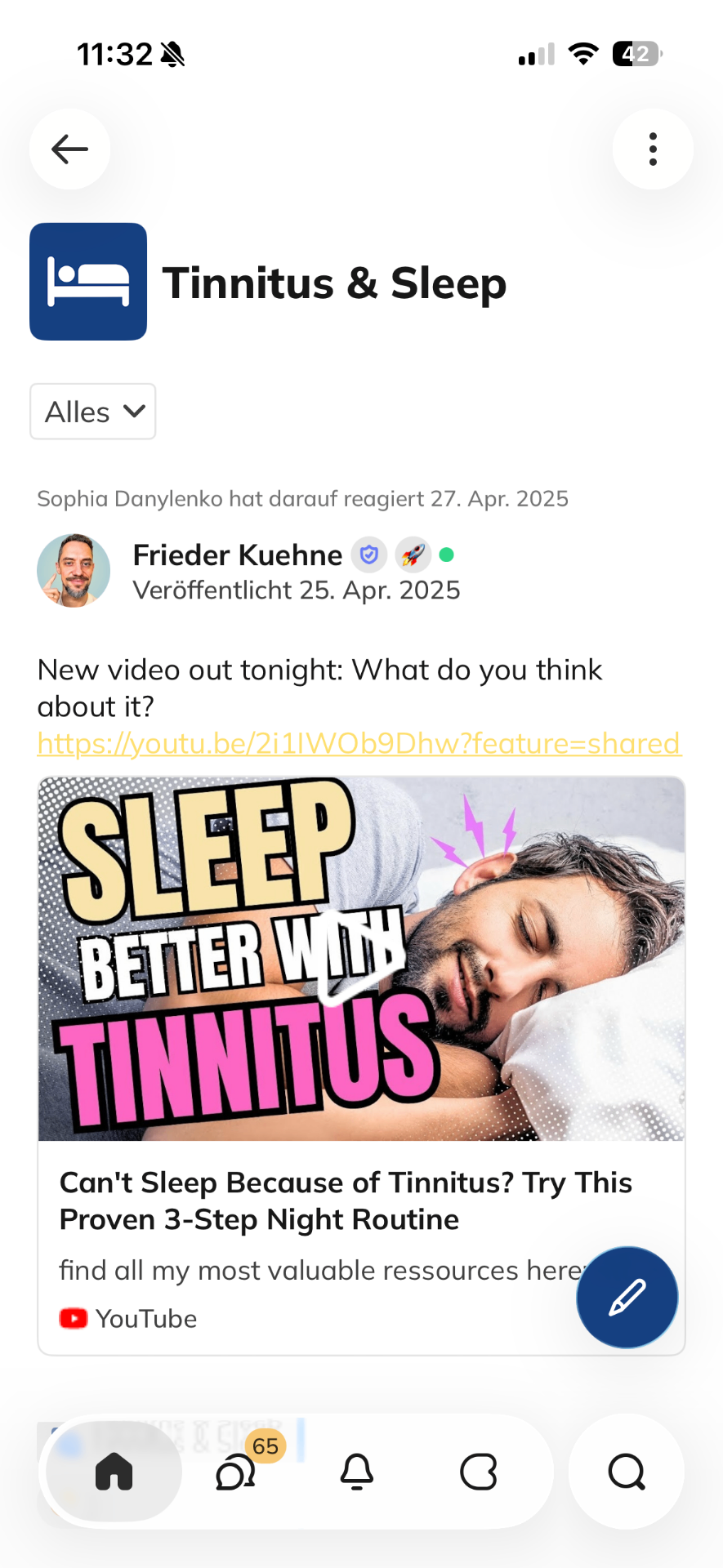
At night, two things happen simultaneously.
First, the absence of background noise removes the partial masking that covers some of the tinnitus signal during the day. The contrast increases. The sound feels louder.
Second, the hyperarousal that tinnitus creates — the monitoring, the anticipatory dread before bed, the checking when you wake at 3am — keeps the nervous system activated. An activated nervous system doesn't sleep. It stays alert, scanning for threat.
So the problem isn't just the sound. It's the loop: tinnitus triggers arousal, arousal prevents sleep, poor sleep makes the nervous system more reactive, which makes the tinnitus feel louder and more threatening the following night.
What doesn't work
The standard advice — white noise machines, sleep hygiene rules, avoiding screens — addresses the surface. These things can provide short-term relief. But they don't change what the nervous system believes about the sound.
If the nervous system still treats tinnitus as a threat, bedtime will remain a threat. No amount of lavender or sleep tracking changes that.
What actually helps
Sleep restores itself when the underlying threat response changes.
When the nervous system stops treating tinnitus as dangerous, the hyperarousal at bedtime starts to settle. The monitoring decreases. The body stops bracing.
This is what happens in ACT-based habituation work. Sleep tends to be one of the first things people notice improving — often before they notice a broader shift in how they feel about the tinnitus during the day. Not because sleep was targeted directly, but because the thing that was preventing it was.
The sound may still be there at night. But it stops being the reason you can't rest.